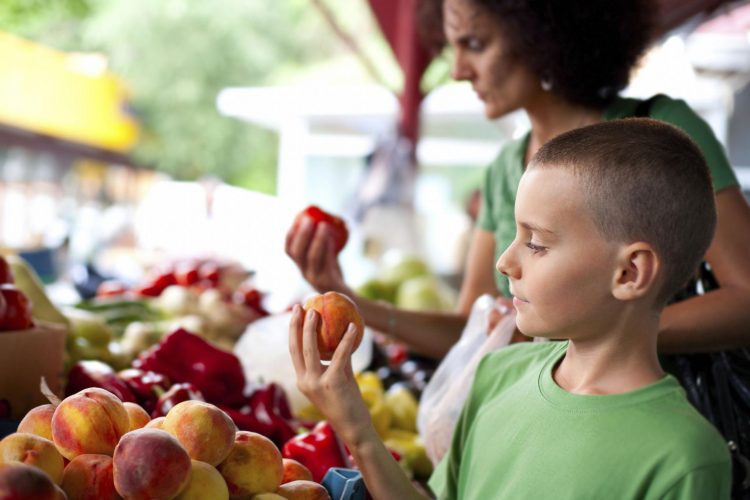
Kids can tell you exactly which snack they want, but they may not know where strawberries grow or that carrots come out of the ground.
And honestly, that’s not surprising.
Most children have far more opportunities to see food in grocery stores than they do in gardens, farmers’ markets, or on farms.
The good news is that helping kids learn where food comes from doesn’t have to feel like a lesson. As we all know, some of the best learning happens when they’re simply exploring, asking questions, and experiencing food in everyday life.
I’ve found that the more often kids see, touch, and interact with real foods, the more familiar those foods become. That’s one reason I love activities that help children connect food to the farms, gardens, animals, and people behind it.
Why It Matters
When children become familiar with food, it often feels less intimidating.
A child who has picked blueberries, spotted zucchini at a farmers market, or watched a tomato plant grow may be more willing to engage with those foods later.
Not because anyone pressured them.
Just because they’re familiar.
The goal isn’t to convince kids to eat everything. It’s simply to help them feel comfortable exploring something new.
- Visit a Farmers Market
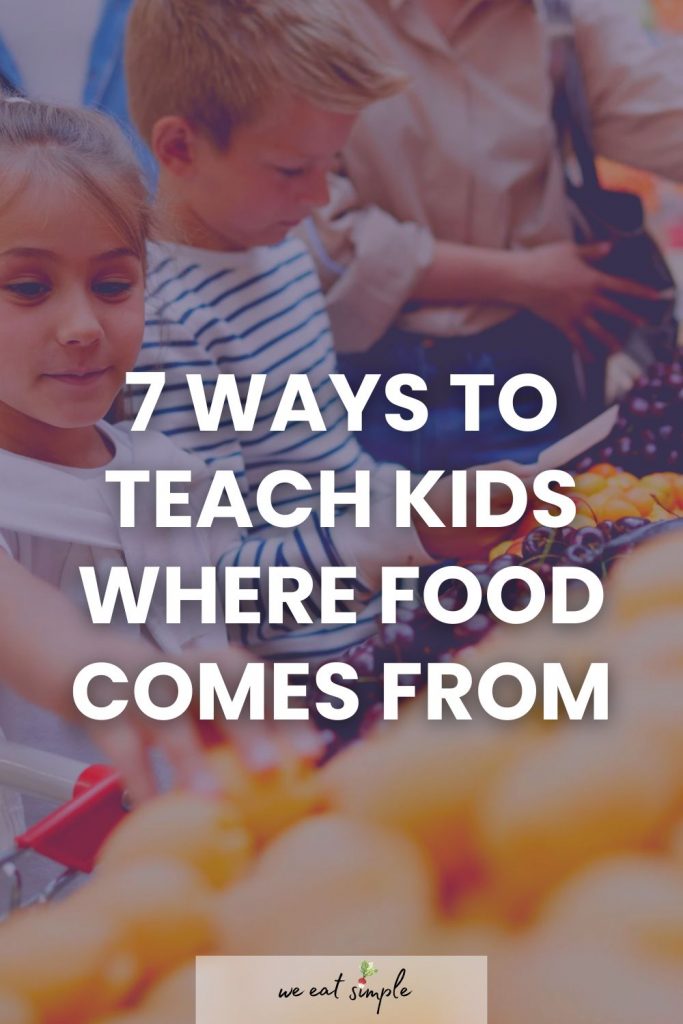
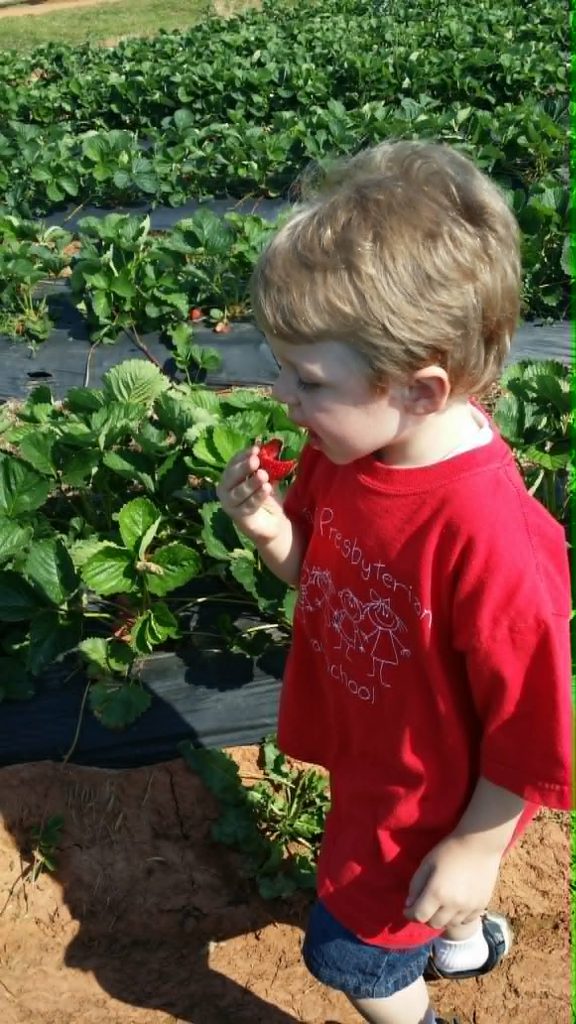
I love going to farmers’ markets, and one of the easiest ways to help kids connect food to take them where it is.
Farmers’ markets are full of colorful fruits and vegetables, friendly faces, and plenty of opportunities to slow down and explore. Let your child help pick out a fruit or vegetable, ask questions, or simply notice what’s in season.
You might be surprised by what catches their attention when they’re free to look around and be curious.
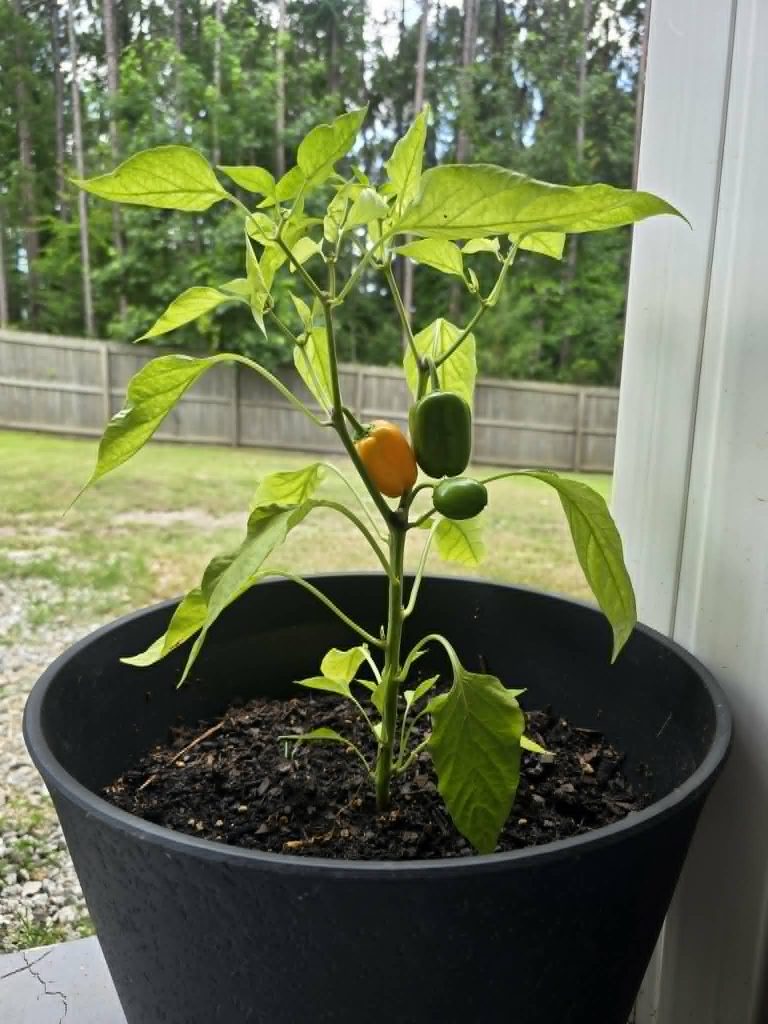
- Grow Something Together
You don’t need a large garden to grow food with kids.
A small pot of basil on the windowsill, a tomato plant on the porch, or a few lettuce seeds in a garden can be enough.
Kids love checking on something they’ve planted and watching it change over time. And there’s something special about tasting food you’ve helped grow.
- Visit a Farm
If you have the opportunity, visiting a farm can be an unforgettable experience for kids. My kids loved visiting our friends’ farm when they were younger.
Seeing the chickens with eggs, vegetables in the fields, climbing on the tractors, and meeting farm animals helped make the connection between farms and food much more real. Plus, they enjoyed coming home with farm-fresh eggs and a big bag of produce.
Many farms offer family-friendly tours, seasonal events, and opportunities to learn through hands-on experiences.
- Read Books About Farms and Food
Books can be a simple way to keep the conversation going at home.
Stories about farms, gardens, fruits, vegetables, and farm animals introduce kids to foods and experiences they may not encounter every day.
And sometimes a favorite story is all it takes to spark a new interest.
- Let them Play
We all know kids learn best when they’re playing and having fun.
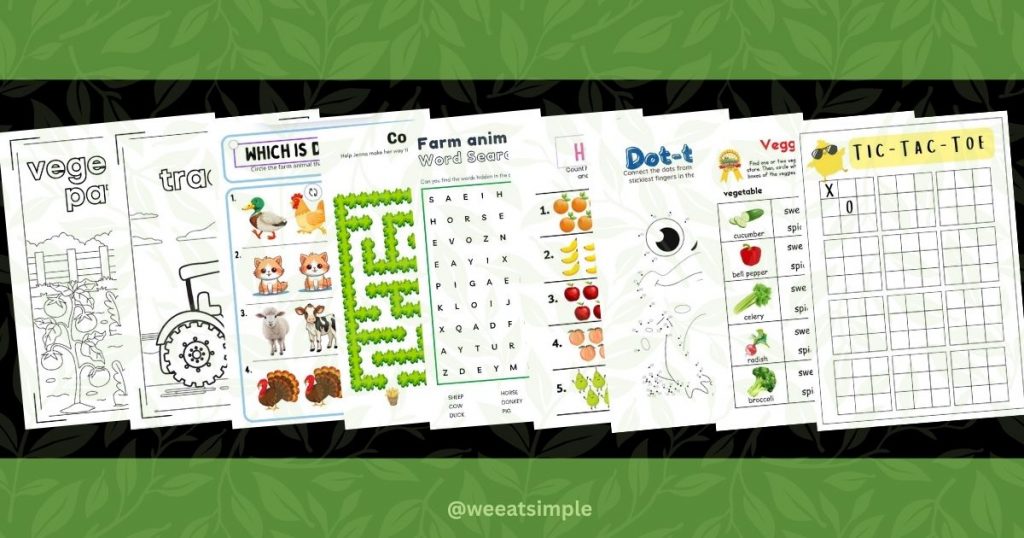
Coloring pages, puzzles, mazes, matching games, and scavenger hunts are simple ways to introduce kids to fruits, vegetables, farm animals, where food comes from, and the people who grow it.
No lessons required.
- Go on a Food Hunt
Turn food exploration into a game.
Whether you’re at a farmers market, grocery store, farm stand, or even walking through your neighborhood, challenge your child to spot fruits and vegetables that are in season.
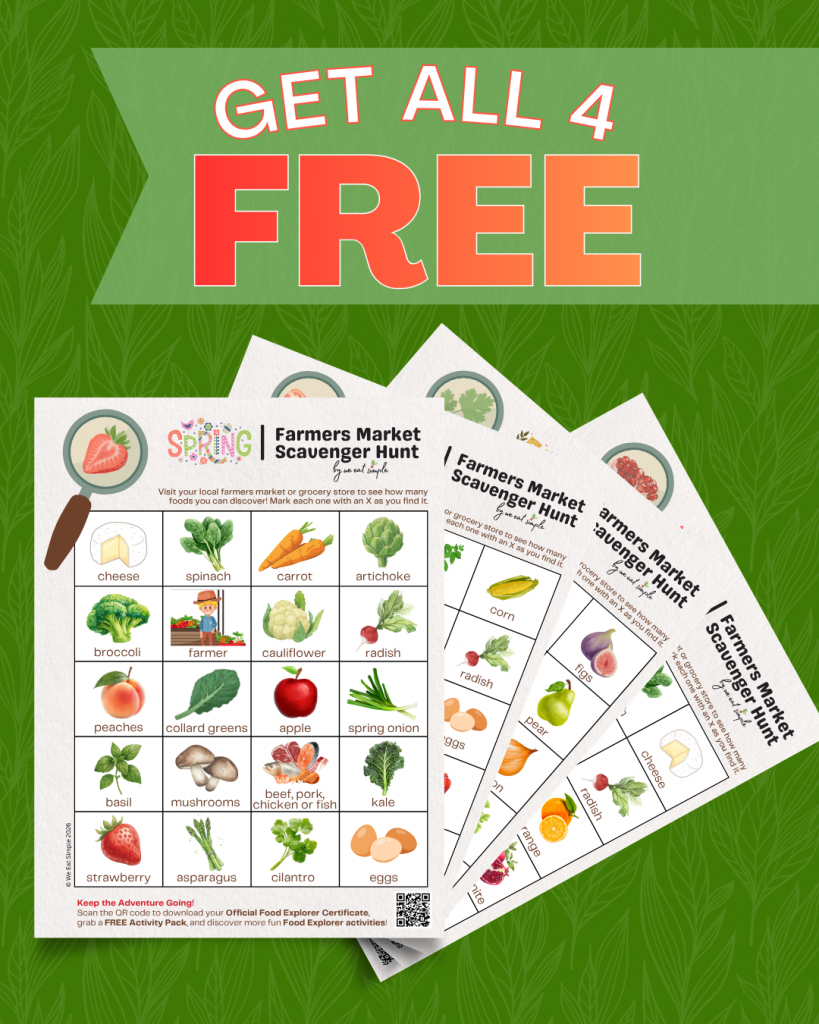
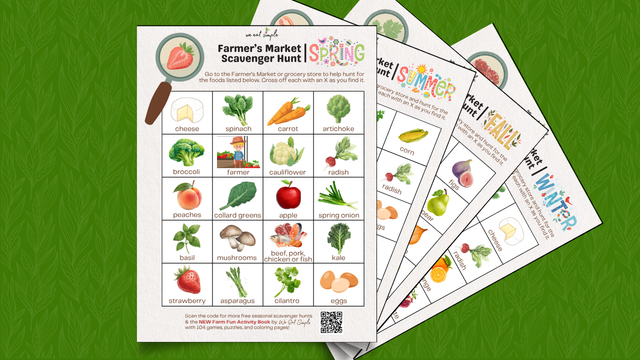
To make it even more fun, grab one of the free Seasonal Farm Scavenger Hunts and see how many items you can find together.
- Become a Food Explorer
This is the one I feel is the most helpful.
Encourage kids to explore all kinds of food, instead of focusing on whether they like it.
What color is it?
What does it smell like?
Is it crunchy, juicy, smooth, or sweet?
Can they describe it?
Will they take one tiny bite?
The goal isn’t to make kids love every food. It’s simply to help them become comfortable exploring something new.
That’s what being a Food Explorer is all about.
Free Seasonal Farm Scavenger Hunts
Want a simple way to start exploring where food comes from?
You can download all four of my free Seasonal Farm Scavenger Hunts and take them with you to the farmers market, grocery store, farm stand, or even on a walk around town.
They’re a fun way to encourage kids to notice seasonal fruits and vegetables as they explore the world of real food.
Looking for More Food Explorer Fun?
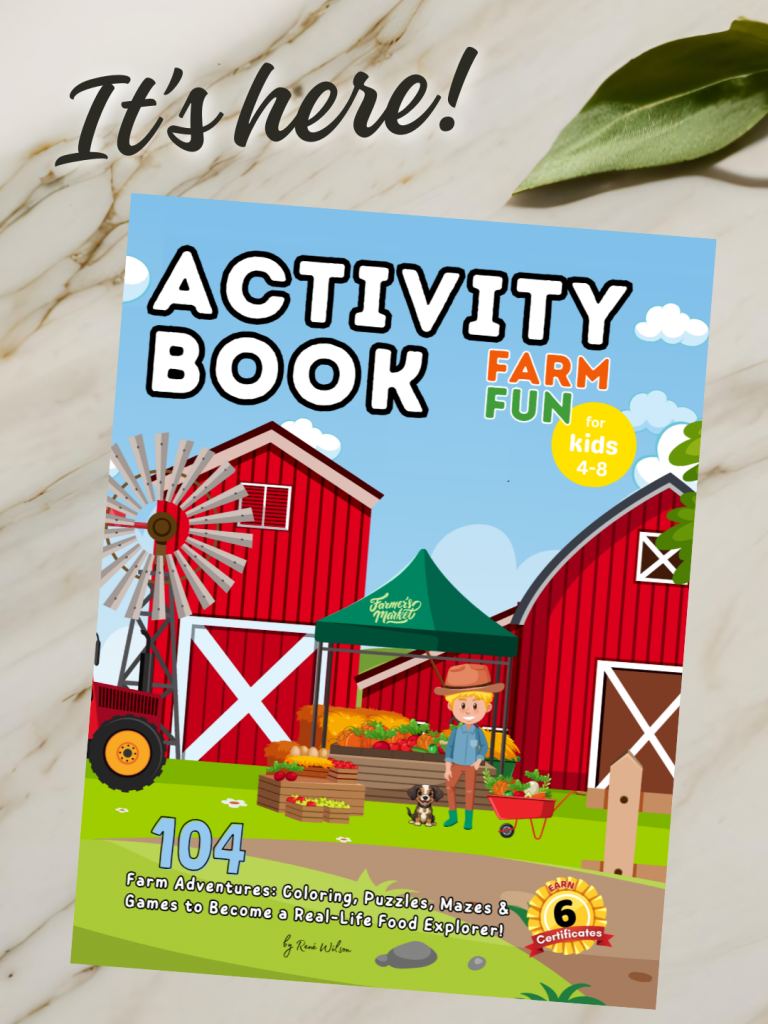
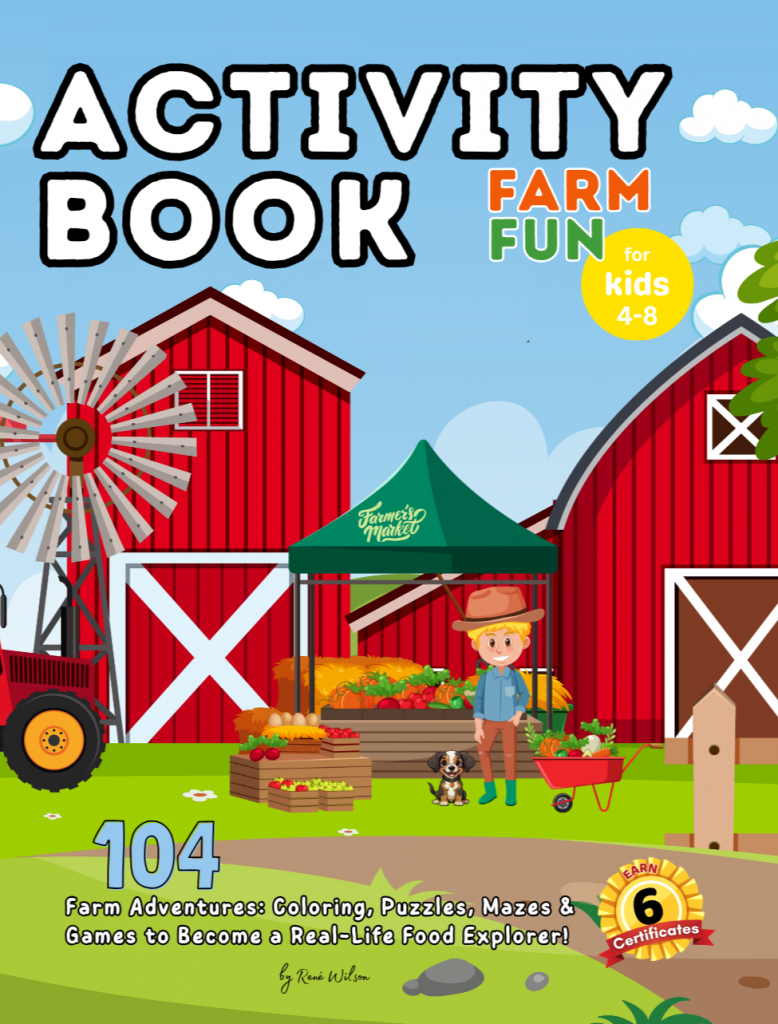
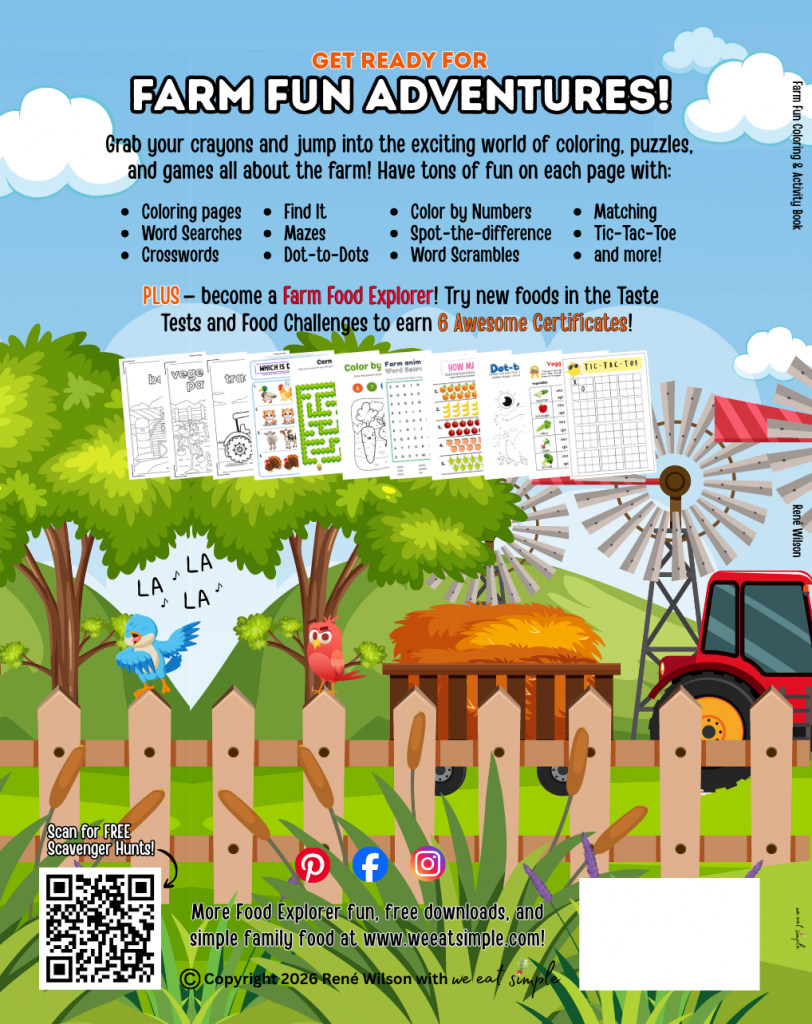
If your child enjoys learning through play, the Farm Fun Coloring & Activity Book expands on these ideas with 104 farm-themed activities, including coloring pages, mazes, puzzles, word games, taste tests, food challenges, and Food Explorer certificates.
It’s designed to help kids explore fruits, vegetables, farm animals, and where food comes from through play.
Final Thoughts
Teaching kids where food comes from doesn’t have to involve formal lessons or complicated activities.
Sometimes the simplest experiences leave the biggest impression—a trip to the farmers market, planting a seed, spotting a vegetable on a scavenger hunt, or trying a fruit they’ve never seen before.
When food becomes something kids can explore instead of something they’re pressured to eat, amazing things can happen.
One small experience at a time, they begin building confidence, making connections, and discovering that real food can be an adventure.
Because every lifelong Food Explorer starts somewhere.